
How to Stop Shoes From Squeaking: Find the Cause, Then Fix It
Most squeaky shoes can be fixed at home in about ten minutes. The noise usually comes from one of three things: an insole rubbing, moisture trapped inside, or a smooth sole on a hard floor. Each has a simple fix.
Start by finding where the sound comes from, then match the fix to the cause. This guide covers new shoes, sneakers, leather boots, orthotics, and wet shoes. It also names a few popular hacks that can damage your shoes.
Sources: a 2026 Harvard study in Nature, care pages from shoe and boot makers, a podiatry clinic, and repair forums. No published tests of the home fixes turned up, so start gentle and test a hidden spot first.
Quick fix chart
| What you hear | Likely cause | Fastest fix | Time |
| Noise inside the shoe, even when you bend it by hand | Insole rubbing, or trapped air or moisture | Powder or a dryer sheet under the insole | 5 minutes |
| Noise only on tile or polished floors | Smooth sole gripping a slick floor | Rub the sole with a dryer sheet, or scuff it lightly | 5 to 10 minutes |
| New shoes, loud from the first wear | Stiff materials that have not settled | Wear them indoors for a few days | Days to weeks |
| Noise after the shoes got wet | Moisture between the insole and base | Remove insoles, dry slowly, add powder | Several hours |
| Leather creaks at the tongue or ankle | Dry leather, or the tongue rubbing the laces | Condition the leather, including the tongue | 15 to 20 minutes |
| Noise after adding orthotics or new insoles | Insert rubbing on the shoe base | Powder, tape, or moleskin under the insert | 5 minutes |
| Heel noise, or the heel feels loose | Heel cup rubbing, loose layers, or a heel coming unglued | Powder under the heel, or a cobbler if it moves | 5 minutes or a repair visit |
| Sole separating, or the noise keeps coming back | Failed glue or a defect | Return if new, or see a cobbler | Varies |
Why do my shoes squeak when I walk?
Squeaks come from two surfaces rubbing, or from trapped moisture or air. Common spots are under the insole, between sole layers, where the tongue meets the laces, and where a smooth sole grips a hard floor. Find the spot first, then fix that spot.
Floor squeaks now have a clear scientific explanation. A 2026 study in Nature, led by Harvard researchers, filmed rubber soles sliding on glass at up to one million frames per second. Small patches of the sole peel away and reattach in fast waves, and the squeak is how often those waves repeat. Smithsonian magazine reports about 4,800 repeats per second in a sneaker. Thin ridges, like a tread pattern, made the waves regular and gave a clear squeak. Flat, smooth rubber made a dull swoosh instead.
That study was about soles on floors. It did not test insoles or any home fix.
How do I find where my shoes are squeaking from?
Run three quick tests. Bend the shoe in your hands: a squeak means the cause is inside. Walk on carpet, then tile: a squeak only on tile points to the sole. Then take out the insole and walk again. Brooks suggests this last test, since a quiet shoe means the insole was rubbing.
Here is what each result tells you:
- Squeaks when you bend the shoe. The cause is inside: the insole, sole layers, or tongue. Try powder or a dryer sheet under the insole first.
- Quiet on carpet, loud on tile. The sole is gripping the floor. Skip the powder and read the floor section below.
- Gone with the insole removed. The insole is the cause. Check for a loose edge, a new insert, or damp foam.
- Only noisy when damp. Dry the shoe before trying anything else.
How do I stop shoes from squeaking when I walk?
Match the fix to the cause. Powder under the insole fixes most inside squeaks. Dry damp shoes fully. Rub a smooth sole with a dryer sheet or scuff it lightly. Condition dry leather. If a sole is coming loose, see a cobbler.
Where do you put baby powder to stop shoes from squeaking?
Pull out the insole, shake a thick layer of powder over the base of the shoe, put the insole back, and walk around so it spreads. Use more than feels needed. A Seattle podiatry clinic says people usually need more powder than they expect, and that one application often lasts for months. If the insole is glued in, sprinkle along the edges and seams.
- Take out the removable insole.
- Shake a thick layer of powder over the base, especially under the heel and the ball of the foot.
- Put the insole back and walk for a few minutes so the powder spreads.
Do this over a sink or newspaper, and avoid breathing in the dust.
Can I use cornstarch or baking soda instead of baby powder?
Yes. Cornstarch works well. Thorogood, a boot maker, lists cornstarch, baking soda, and other powders without talc. Johnson & Johnson stopped selling talc baby powder in the US and Canada in 2020 and worldwide in 2023, so most baby powder sold in the US is now cornstarch based.
Baking soda is a maybe. One shoe retailer warns that it is rough and can wear down some foams over time. Start with cornstarch.
Talc is the one to skip. FDA tests found asbestos in one bottle of Johnson’s talc powder, and the company recalled 33,000 bottles. The company says its own tests found none. Cornstarch does the same job.
Do dryer sheets stop squeaky shoes?
Often, yes. Slide a dryer sheet under the insole as a soft buffer. A Seattle podiatry clinic suggests cutting one to the shape of the insole and placing it under the orthotic. Timberland says rubbing a dryer sheet along a boot sole can cut the noise without hurting grip, though you may need to repeat it.
Why do my insoles or orthotics squeak?
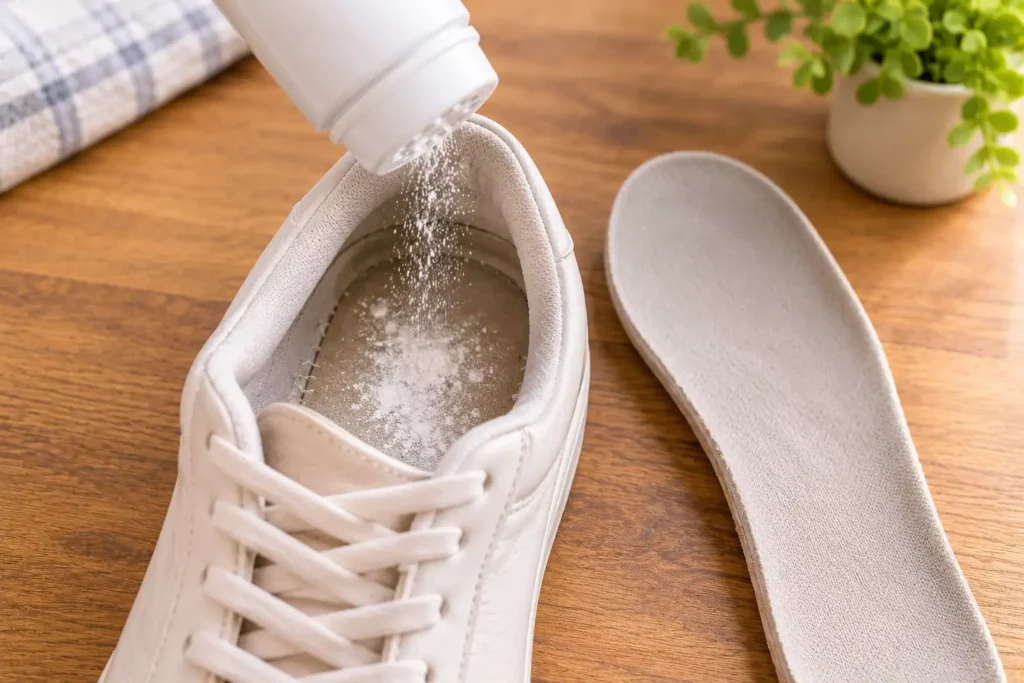
Friction. The insert rubs the base of the shoe, or air and moisture are trapped under it. Brooks says trapped air or moisture under the insole is the cause in most cases. Powder, tape, or a dryer sheet under the insert usually quiets it.
If powder alone fails, try these one at a time:
- Tape. Brooks suggests painter’s or masking tape on the bottom of the insole, smooth side up, to make a slick surface.
- Dryer sheet. Cut it to fit under the insert.
- Moleskin or tape on the edges. The podiatry clinic notes that the side edge of an orthotic is sometimes the part that rubs.
- Wax. Thorogood suggests a small amount of wax under the back edge of a new insole.
If you wear custom orthotics and the noise stays, ask your podiatrist. The clinic says a podiatrist can narrow or bevel the edges of the device.
Why do new shoes squeak, and will it go away?
New materials are stiff and parts have not settled, so they rub. A light squeak often fades with wear. Thorogood says breaking in leather boots can take anywhere from days to months.
Where the noise comes from matters. A squeak from the sole on slick floors is normal in new shoes. Timberland says a brand new pair should not squeak inside, and that inside noise can point to a loose sole and a defect that a warranty should cover.
Wear them indoors for a few days and try the powder fix early. Also check the fit: Thorogood notes that a foot sliding in a loose boot can make a sock squeak against the insole.
Why do my shoes squeak on tile and other hard floors?
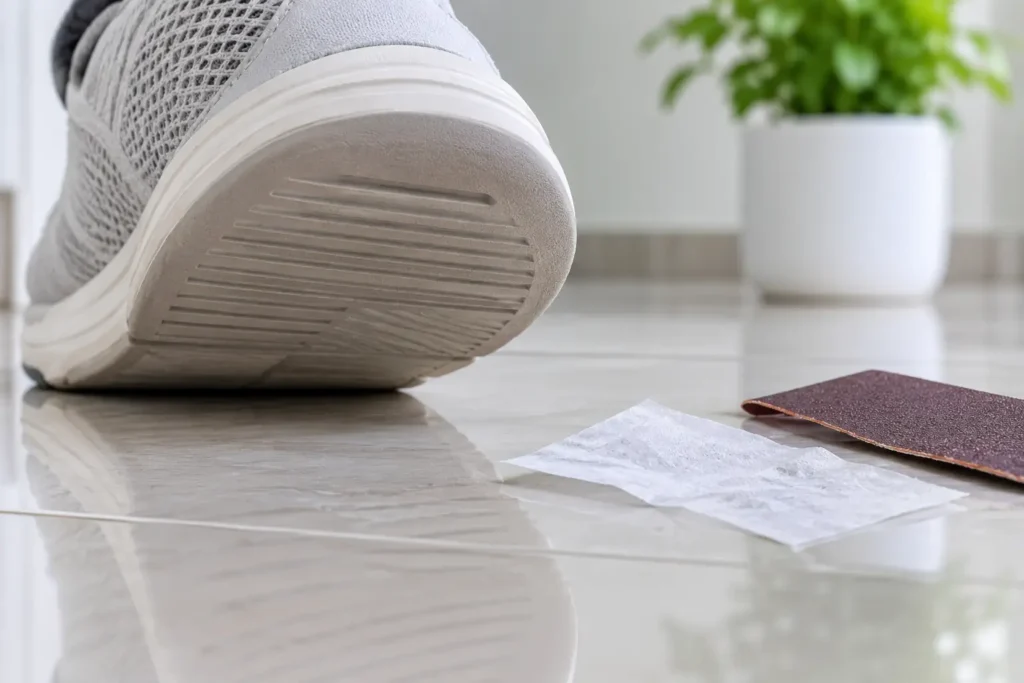
Smooth soles grip slick floors, then release in quick bursts, which makes the sound. Tile, polished wood, and gym floors do it most. If your shoes are quiet on carpet, the sole is the cause. Hard rubber and polyurethane soles are especially prone, according to Timberland and Thorogood.
A tile cleaning company, Zerorez, adds that cracked tiles and freshly mopped floors can add noise, so let a floor dry before you judge your shoes. Rubbing a dryer sheet over the sole or scuffing it lightly are the usual fixes.
Can sandpaper stop squeaky soles?
It can help on smooth rubber soles. Timberland suggests 60 to 120 grit sandpaper, while Zerorez suggests 120 to 220. Both say to scuff lightly. Zerorez says it also improves traction. Leave the tread pattern in place and sand only smooth, shiny areas.
Clean the sole first, rub in light strokes, wipe off the dust, and test on a hard floor.
Can I use WD-40 on squeaky shoes?
It is a gamble. Thorogood lists it as something to try on leather boots but says it probably will not remove all the noise. Other sources warn that it can stain suede and fabric, and it can leave an oily sole slick. Try powder or a dryer sheet first, and test a hidden spot if you do use it.
| Source | What it says |
| Thorogood, a boot maker | Worth a try on leather boots, but unlikely to fix everything |
| Home tip sites such as Reader’s Digest | Dab on seams with a cotton ball, but never on suede |
| Leather care advice | Avoid oils and solvents on leather uppers |
Slip resistance matters here. Lab ratings for footwear grip come from a test called ASTM F2913. A 2017 Occupational Health and Safety article notes that no US regulator with enforcement power, such as OSHA, defines or measures footwear slip resistance. If your work shoes are sold as slip resistant, sanding or spraying the sole may change how they grip. Ask the maker first.
Why do my leather shoes or boots squeak?
Thorogood explains that leather fibers expand and contract with heat, moisture, and movement, and the layers inside a boot rub as they compress. Dry leather can turn brittle and make more noise. Condition the leather, including the tongue, and let new pairs break in. For boots in particular, see our full guide on how to stop leather boots from squeaking.
Wipe off dirt, then rub a small amount of leather conditioner into creases and the tongue in small circles. Wipe off the excess and test.
For a squeaking tongue or eyelet area, Timberland suggests saddle soap. Keep conditioner off the soles.
One point of confusion: Nike suggests petroleum jelly or coconut oil on the bottom of an insole, while Think!, a leather shoe maker, warns against cooking oil on leather. They mean different parts. A thin layer under an insole is not the same as oil on a leather upper, which can stain.
Why do my shoes squeak when they’re wet?
Water sits between the insole and the base and lets parts slip and rub. Take out the insoles, stuff the shoes with paper, and dry them slowly. Nike says to allow about 12 hours and suggests a fan or vent with warm air. Think! warns that radiators and ovens strip moisture from leather and make it brittle. Gentle airflow is the safe middle. A little powder under the insole afterward helps.
Why do my running shoes or foam soled sneakers squeak?
Brooks says trapped air or moisture under the insole causes most squeaks in its shoes. It suggests removing insoles after each wear so the shoe and insole can dry, then adding powder or tape if the noise stays. If the shoe still squeaks, contact the maker, since some brands cover defects.
Why do my heels squeak when I walk?
Thorogood says a reinforced heel cup can flex and rub other parts of a boot. Heel noise can also come from loose layers or a heel coming unglued. Try powder under the heel of the insole and snug, thicker socks. If you can see a gap or feel the heel move, see a cobbler.
Why does only one of my shoes squeak?
Each shoe is built and worn on its own, so the cause is often local: one insole, one glued seam, or one tongue. One reader reported that powder fixed only one shoe of the pair. Treat each shoe separately. If one stays loud, it may have a defect.
What should I not do to fix squeaky shoes?
Skip anything that cannot be undone or that can damage the material.
- Cutting holes in the sole. One reader tried it on work sneakers and it did not help. It cannot be undone.
- Tumble drying. The same reader tried it without success, and leather makers warn against heat.
- Hairspray. Think! says it can reduce the leather’s natural grip, leave a sticky residue, and may make squeaking worse.
- Cooking oil on leather. Think! warns it can stain, especially dyed leather.
- Direct heat. Radiators and ovens can make leather brittle.
- Prying apart a sole to glue it. A cobbler on a repair forum advises against this unless the sole is already separating.
Should I return squeaky shoes or take them to a cobbler?
Return new shoes that squeak inside from the first wear, since it may be a defect. Timberland says a new pair should be covered by warranty. Go to a cobbler when a sole is separating, a heel is loose, or the noise returns after powder, drying, and conditioning. Check the return window and warranty before you wear the shoes much.
How can I keep my shoes from squeaking in the future?
Keep them dry, keep them snug, and keep leather conditioned.
- Dry after wear. Brooks suggests removing insoles after each wear.
- Rotate pairs. Avoid wearing the same pair two days in a row.
- Store them dry. Silica gel packs help absorb moisture.
- Condition leather often. Thorogood notes that conditioning, including the tongue, helps leather stay supple.
- Check the fit. A shoe that is too loose lets your foot slide and parts rub.
Supplies mentioned in this guide
- Cornstarch or baby powder
- Dryer sheets
- Painter’s tape
- Moleskin padding
- Leather conditioner or saddle soap
- Fine sandpaper
- Silica gel packs
Sources and further reading
- Harvard SEAS: The Physics of a Squeak
- Nature: study on squeaking soft contacts
- Smithsonian: Why do basketball players’ shoes squeak?
- CBS News: Johnson & Johnson will stop selling talc baby powder globally
- Occupational Health and Safety: Stand Your Ground
- Brooks: Squeaky shoes
- Timberland: How to stop boots from squeaking
- Thorogood: How to stop boots from squeaking
- Foot and Ankle Center of Washington: Squeaky orthotics
- Nike: 5 solutions to stop shoes from squeaking
- Think!: How to fix squeaky shoes
- Zerorez: Why your shoes squeak on tile floors
- Reader’s Digest: Squeaky shoes tips


